
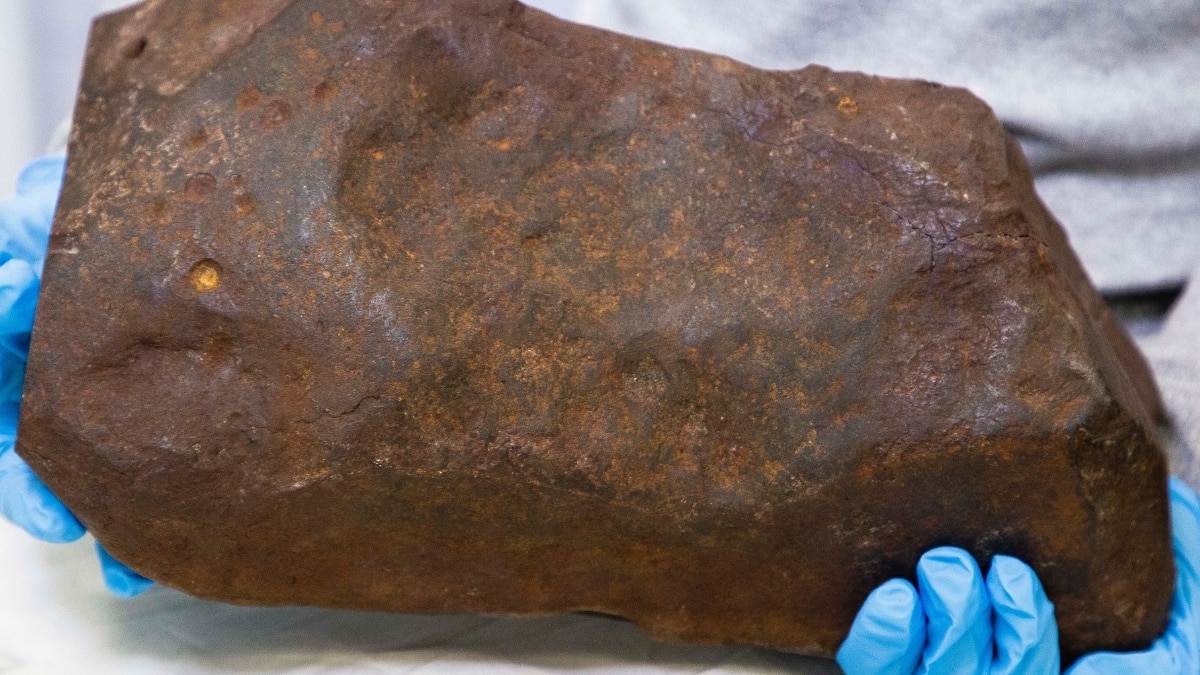
Sometimes, amateur prospecting leads to truly extraordinary surprises. In 2015, David Hole was exploring the Maryborough Regional Park in Victoria, Australia, using a metal detector when he encountered something remarkable: a heavy, reddish stone partially buried among tree roots. This region is famous for its hidden treasures, so it was natural to suspect that such a dense find could be gold. However, what he discovered was far rarer than gold. The story of this meteorite discovery would soon reveal secrets stretching back billions of years—far older than any golden nugget.
How did an unusual find start with mistaken identity?
When someone uncovers a weighty and dense object in Victoria’s legendary goldfields, excitement often follows swiftly. That same surge of hope inspired David Hole as he unearthed his odd, iron-stained specimen. Its significant heft and reddish shimmer suggested something unique beneath the surface.
The dream of striking gold has motivated countless individuals in this region. David shared in that anticipation when his metal detector signaled something substantial. It seemed reasonable to believe that such a solid mass might hide unimaginable riches, but this was only the beginning of a much more astonishing journey. Indeed, some rare finds initially masquerade as local minerals before their true nature comes to light; for example, museum identification sometimes reveals these objects to be meteorites rather than ordinary rocks.
Why didn’t the rock reveal its secrets right away?
This unusual object from Maryborough stood out thanks to its sculpted surface, marked by grooves and deep dimples formed during its fiery passage through Earth’s atmosphere. Attempts to break it open proved futile: saws and drills wore down, and even acid made no progress against its tough exterior. The stubbornness of the stone led to growing frustration, yet David persisted, unwilling to abandon such a curious find.
After exhausting every standard method, he realized it was time to seek professional help. Only expert eyes and specialized tools could unlock the mystery behind this enigmatic rock.
What happened at the museum?
David eventually brought the specimen to the Melbourne Museum, where experts were accustomed to handling rare geological objects. Their equipment quickly revealed answers. The combination of high iron content, smooth indentations, and unusual weight left little doubt—it was not gold, but a genuine meteorite.
This identification transformed the rock from a hopeful treasure into a rare scientific find. Thus began a new chapter, revealing why this meteorite was considered far more valuable than gold.
How rare is the Maryborough meteorite?
Weighing nearly 17 kilograms, this specimen is exceptionally rare—not just in Australia, but worldwide. Remarkably, it became only the seventeenth known meteorite ever found in Victoria. Experts classified it as an H5 ordinary chondrite, filled with metallic iron and ancient chondrules—tiny round grains dating back to the Solar System’s very origins. According to carbon dating, this meteorite likely landed between 100 and 1,000 years ago, joining a small group of confirmed finds in the region.
Unlike gold, which can be uncovered with enough determination, stumbling upon such a meteorite is a once-in-a-lifetime experience. Its rarity alone makes it highly prized among collectors and researchers alike.
What scientific significance does the meteorite hold?
This rare find captivated both scientists and collectors. The true value lies in its age and composition. Dating reveals it formed about 4.6 billion years ago, making it nearly as old as the sun itself. Holding a piece like this means holding remnants from before Earth’s continents and oceans existed.
The embedded chondrules inside provide clues about the early Solar System. By analyzing these features, scientists estimate the meteorite landed on Earth between 100 and 1,000 years ago, long before modern records could witness its arrival. Such discoveries deepen understanding of planetary formation and cosmic history.
Where did the meteorite originate?
Meteorites like the Maryborough specimen begin their journey in the asteroid belt between Mars and Jupiter. Collisions send fragments hurtling through space, and gravity sometimes draws them toward Earth. The pitted surface, shaped by intense atmospheric entry, stands as evidence of this violent descent.
Inside, the meteorite holds not only ancient chondrules but also stardust and traces of extraterrestrial organic molecules. Each sample acts as a cosmic archive, offering insights into how planets—and potentially life—began. This scientific significance elevates such meteorites above traditional notions of value.
Why are meteorites more valuable than gold?
Though gold commands impressive prices, certain meteorites fetch even higher sums from museums, collectors, and research institutions. Their rarity and the wealth of information they offer about the early Solar System make them especially sought after. Chemical analyses and isotopic studies support theories that laboratories cannot easily replicate.
Beyond financial worth, there is a deeper privilege in contributing to humanity’s knowledge of the cosmos. Owning or studying a meteorite means taking part in a centuries-old quest to understand our universe—something no amount of gold can match.
What lessons can treasure hunters learn from this?
Metal detector discoveries continue to ignite curiosity, proving that astonishing secrets may still wait beneath our feet. Not all treasures shine; some carry hidden stories spanning billions of years. True value often lies outside conventional expectations, waiting for patient and attentive hands to uncover another piece of universal history.
For those seeking their own adventure, several practical tips emerge:
- Handle strange rocks carefully and avoid forceful attempts to open them if unsure of their makeup.
- Consult museums or research institutions promptly when confronted by inexplicable finds—they could be meteorites.
- Document the location and circumstances of each discovery to aid identification and enhance scientific context.
- Remember that rarity, geological features, and historical background may eclipse typical market value.
The tale of the Maryborough meteorite proves that some stones conceal stories richer than gold. Every unassuming rock could secretly hold a fragment of the cosmos, patiently awaiting discovery by those willing to look beyond appearances.