
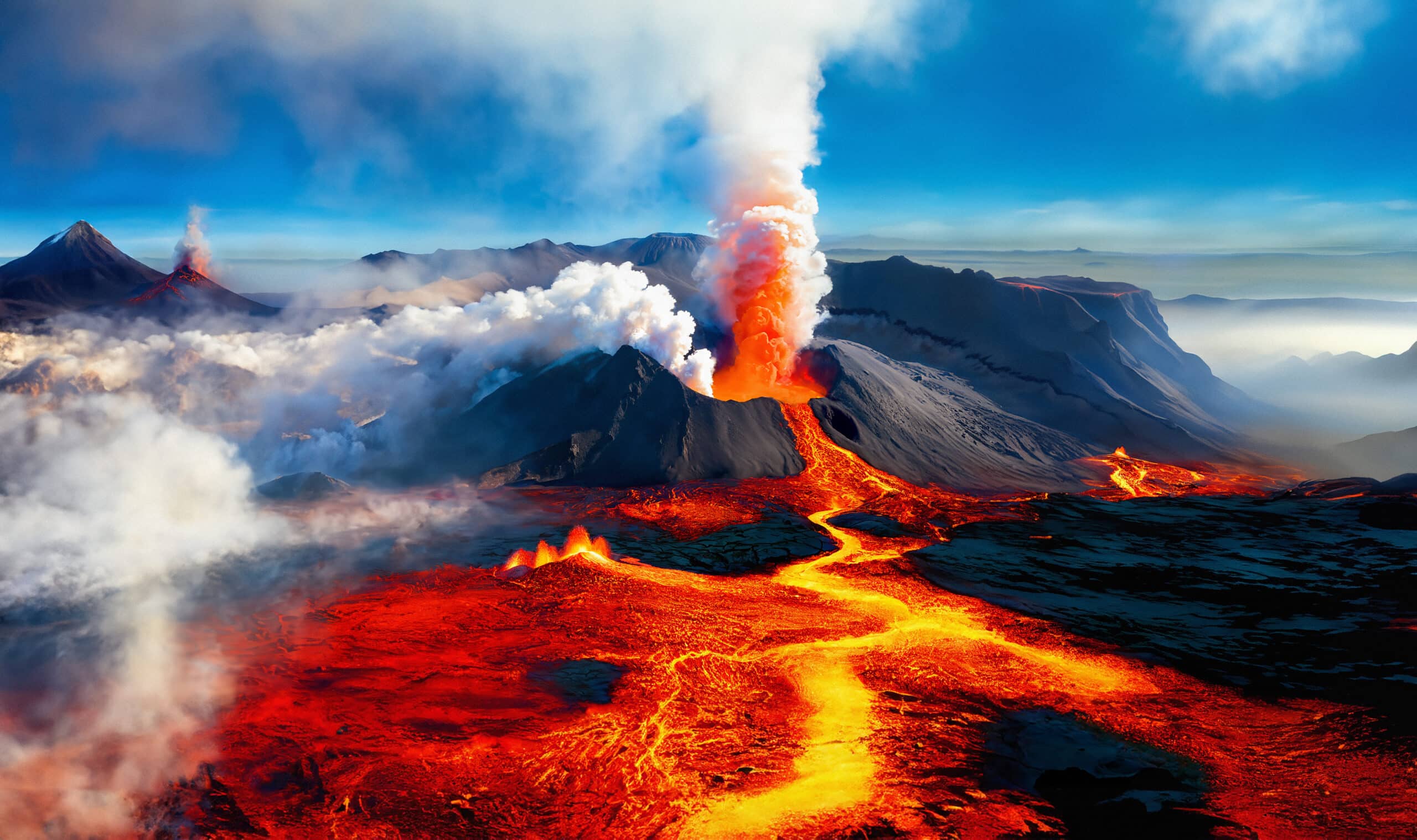
The idea of a giant and destructive eruption causing chaos on a global scale is no longer just the stuff of science fiction. In recent years, scientists’ warnings have become more urgent about the real risk that a supervolcanic eruption might shake the world in the coming decades, potentially threatening human civilization as it is known today. As new research emerges and geoscientists revisit ancient disasters, attention grows around what an imminent eruption could mean for daily life, the climate, and the survival of millions.
Why are scientists worried today?
Growing concerns among researchers come from a mix of geological history and the latest risk assessment models. Markus Stoffel, climatologist at the University of Geneva, estimates there is a one-in-six chance that a massive volcanic eruption will occur before the century’s end. This stark probability has raised alarms among experts monitoring seismic activity and analyzing patterns beneath the Earth’s surface.
Volcanic giants like Yellowstone or Indonesia’s Toba caldera attract particular scrutiny. These formations have a documented history of producing eruptions capable of altering the planet’s atmosphere for years, with consequences that extend far beyond local devastation to truly planetary repercussions.
Historical precedents of extinction events
History offers sobering reminders of nature’s power. The 1815 eruption of Tambora triggered the infamous “year without summer,” unleashing crop failures and famine across Europe and Asia. Even the 1991 eruption of Pinatubo, although less intense, led to a measurable drop of 0.5°C in average global temperature. Such episodes keep the scientific community acutely aware of the unpredictable force of large-scale eruptions.
These extinction events demonstrate how supervolcanoes can send ash clouds and gases like sulfur dioxide into the stratosphere, blocking sunlight and sparking abrupt climate changes. Lessons learned from these disasters shape present-day strategies for disaster preparedness and reinforce the importance of long-term planning.
The unique threat posed by Vesuvius and other volcanoes
While Vesuvius is legendary for its destruction of Pompeii, it pales in comparison to the potential impact of true supervolcanoes. Yet, even moderate eruptions from multiple volcanoes occurring simultaneously could amplify atmospheric effects and worsen global outcomes. This possibility keeps scientists vigilant and compels ongoing surveillance using advanced satellites and sensor networks.
Despite all technological advances, predicting the exact timing or intensity of a world-shaking disaster remains elusive. The hidden movements of magma deep underground are difficult to track, highlighting the need for better predictive tools and more robust international cooperation.
What consequences would a supervolcanic eruption bring?
An authentic supervolcanic eruption means much more than regional catastrophe. The most significant danger comes from the enormous quantity of sulfur dioxide expelled, which forms persistent aerosols high in the stratosphere. These aerosols block sunlight, leading to sharp drops in temperature and disrupted weather patterns worldwide.
The resulting darkness and cold wreak havoc on agriculture, triggering food shortages and widespread famine. Densely populated regions, especially parts of Asia and Africa reliant on stable monsoon cycles, would be particularly vulnerable as harvests fail and vital resources dwindle.
Disruption of climate and agriculture
Meteorologists warn that such an eruption would disturb monsoons, potentially causing droughts or unseasonal rains. Following Tambora’s explosion, rice fields failed throughout Southeast Asia, sparking famine and suffering among populations who were caught off guard by sudden climate shifts. If history repeats itself, entire nations could find their food security imperiled within months.
The damage extends beyond crops. Livestock suffer from contaminated grazing land and water scarcity. Supply chains falter, transportation grinds to a halt, and social order becomes fragile under the strain of cascading resource failures. In extreme scenarios, this chain reaction risks escalating into a true extinction event with lasting global consequences.
Societal and economic stressors
Beyond environmental upheaval, economies would face simultaneous infrastructure breakdowns and mass migration. Power plants struggle against thick ash clouds and falling temperatures, while cities experience blackouts and rural communities become isolated. Panic buying, civil unrest, and overwhelmed health services only add to the turmoil.
Traditional disaster response protocols are not designed for events of this magnitude. Strategies must evolve to include coordinated efforts across borders, rapid humanitarian airlifts, and innovative solutions simply to maintain basic services. However, despite the mounting scientists’ warning, preparation remains severely lacking.
Are preparations underway for an imminent eruption?
No unified plan exists to address a supervolcanic eruption of this scale, despite clear evidence of potential danger. Most disaster frameworks cover floods, hurricanes, or earthquakes—scenarios dwarfed by the complexity and reach of a massive volcanic event. Solutions require international agreements, technological breakthroughs, and strong public awareness efforts.
The infrequency of such disasters contributes to complacency. Although some proposals for contingency plans exist, they often languish due to competing short-term priorities. True readiness for an imminent eruption remains out of reach, with insufficient investment and limited global coordination.
- Continuous global monitoring of seismic activity around known supervolcanoes
- Investment in rapid-deployment humanitarian aid and resilient supply chains
- Research into alternative energy sources and agricultural methods suitable for low-light conditions
- Improved cross-border communication for swift and effective crisis response
- Comprehensive public education campaigns on volcanic risks and resilience strategies
Ultimately, a blend of technological innovation and international collaboration will determine whether the next massive volcanic eruption becomes a survivable challenge or triggers the feared end of humanity. While scientific progress continues, the gap between current capabilities and the demands of a real extinction event remains wide. The race to prepare unfolds both beneath the Earth’s surface and within global scientific communities, underscoring the urgency of proactive action.